

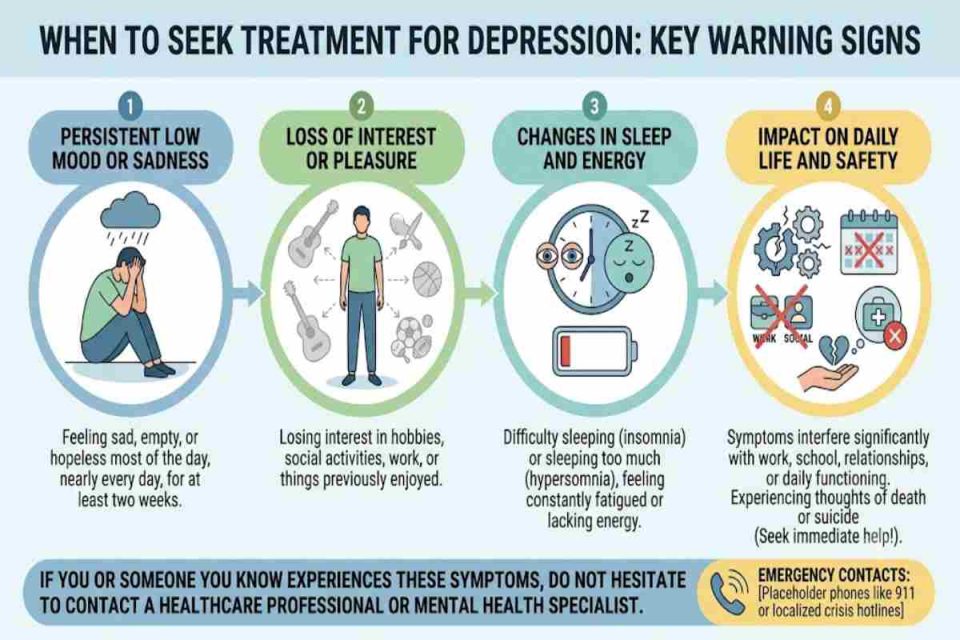
Depression can affect mood, sleep, energy, concentration, relationships, and everyday responsibilities. Knowing Explain when you should seek treatment for depression is important because persistent symptoms should not simply be dismissed as a bad phase or a lack of motivation. Depression is a treatable mental health condition, and professional support can be appropriate even when symptoms do not seem severe.
The material presented here is designed for educational purposes and is not meant to be a substitute for professional medical or mental health assessment and therapy. If you think you may be a threat to yourself or others, please seek help immediately and call emergency services.
Table of Contents
What Is Depression?
Depression is not simply just feeling down. The WHO defines what it refers to as a “depressive episode,” stating “a period of illness dominated by either depressed mood, or loss of interest or pleasure. A depressive episode requires either ‘a depressed mood or loss of interest or pleasure’ accompanied by two other somatic and psychic symptoms… Which should be present during at least a two-week period, nearly every day, most of the day”.
Common symptoms can include:
- Persistent sadness, emptiness or irritability
- Losing interest in activities once enjoyed
- Low energy or unusual tiredness
- Difficulty concentrating or making decisions
- Changes in sleep
- Changes in appetite or weight
- Feelings of guilt, worthlessness or hopelessness
- Withdrawing from friends and family
- Thoughts about death, self-harm or suicide
Not everyone’s depression manifests itself in exactly the same way. For some people, many symptoms may be present; for others, only a few may be recognizable and still create many disturbances.
Explain When You Should Seek Treatment for Depression
Once your symptoms of depression are not getting better with self-treatment and if you notice they are beginning to be overwhelming, or interfering with your daily routine, then it would be worth calling a medical professional. There is no reason to wait until the depression is “fully developed”.
A practical guide is:
| Situation | What to do |
|---|---|
| Low mood lasting several days but improving | Monitor symptoms and maintain support |
| Symptoms persist for around two weeks | Arrange a professional assessment |
| Work, study or relationships are being affected | Seek professional help |
| Sleep or appetite changes are persistent | Discuss them with a healthcare professional |
| You are withdrawing from people or activities | Consider talking to a doctor or mental-health professional |
| Symptoms are worsening despite self-care | Seek assessment rather than waiting |
| Thoughts of self-harm or suicide | Seek immediate crisis or emergency support |
WHO recommends getting help when any of the symptoms of depression occur, while NIMH suggests seeking help for clinical symptoms of the illness (which may be distressing) and if they last for two weeks.
You Do Not Have to “Wait Until It Gets Worse”
A common misconception is that someone must reach a crisis point before asking for help. That can delay treatment unnecessarily.
Therefore, although you are managing to work, go to school, and look after children, lingering changes in your mental state (mood, sleep, interests, and motivation) could require an assessment.
A Simple Workflow for Getting Help
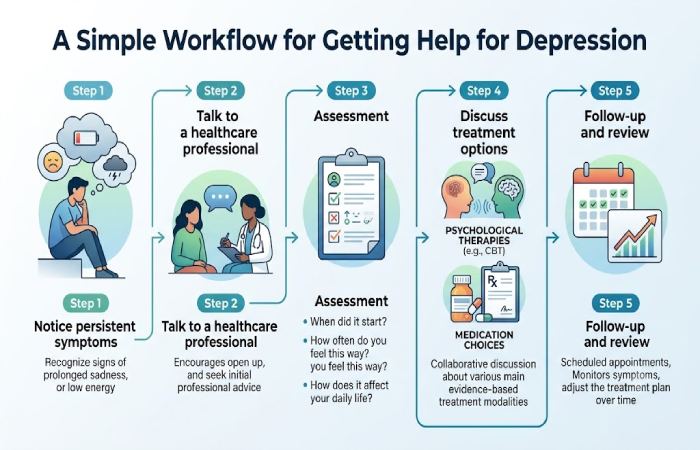
It’s important to note that going to get treatment isn’t a sign you are immediately going on a pill. Normal steps would be:
Notice persistent symptoms → Talk to a healthcare professional → Assessment → Discuss treatment options → Follow-up and review
As part of an assessment, a therapist can pose questions such as when the symptoms first appeared, how often they occur, and how much impact they have on day-to-day activities. As some physical health problems and certain medicines can also cause a form of depression, a therapist would need to check that there are no alternative sources:
A variety of psychological therapies or drug treatment, or sometimes both, may be employed, depending on the symptoms presented by the individual. As the WHO stated, various types of psychological therapies are identified that could treat depression, such as cognitive behavioral therapy, behavioral activation, interpersonal psychotherapy, and problem-solving therapy.
When Is Depression an Emergency?
Some symptoms require urgent help rather than a routine appointment.
The following points, and indeed any consideration of suicidal or self-injurious feelings, should be taken most seriously. This should be the situation particularly if the individual: has a suicide plan; is looking for methods of suicide; is saying goodbye and giving away property or otherwise saying farewells to loved ones and close friends; or exhibits a rapid change in previously normal, happy personality that is concerning.
If you believe you or another person is in immediate danger:
- Do not leave the person alone if it is safe to remain with them.
- Contact emergency services or go to the nearest emergency department.
- Tell a trusted family member, friend, or another responsible person.
- In India, contact Tele-MANAS on 14416 or 1800-89-14416 for 24/7 tele-mental-health support.
What Treatment for Depression May Involve
Treatment depends on the severity and type of symptoms, as well as the individual’s needs.
| Treatment approach | What it may involve |
|---|---|
| Psychological therapy | Structured conversations and techniques to manage thoughts, behavior, and coping |
| Medication | Antidepressants prescribed and monitored by an appropriate healthcare professional |
| Lifestyle support | Regular sleep, physical activity, social connection and healthy routines |
| Combined treatment | Therapy and medication may be considered together in some cases |
| Follow-up | Reviewing progress, side effects and whether the treatment remains appropriate |
WHO states that psychological treatments are first-line treatments for depression and that antidepressants may be combined with psychological treatment for moderate or severe depression.
What Can You Realistically Expect From Treatment?
Treatment is not necessarily an instant solution. Improvement can take time, and the most suitable approach differs from person to person.
It is realistic to expect that treatment will alleviate your symptoms and enable you to manage the everyday effects of the problem more easily and return to a better level of well-being. Follow-up is necessary because treatment may need to be adjusted based on how you respond, any side effects, and circumstances that may change over time.
Self-care practices may aid recovery, but when a problem persists or worsens, self-care must not replace professional treatment. Staying in contact with supportive friends and family, eating regular meals, keeping a regular sleep schedule, finding an appropriate place for exercise (if possible), and eliminating alcohol and non-prescription drugs will all be beneficial.
Should You See a Doctor, Psychologist or Psychiatrist?
The right starting point can depend on access and individual circumstances.
| Professional | Potential role |
|---|---|
| General doctor | Initial assessment and referral where appropriate |
| Psychologist | Psychological assessment and talking therapies |
| Psychiatrist | Medical assessment and treatment, including medication where appropriate |
| Counsellor/therapist | Emotional support and structured talking-based interventions |
You cannot, and don’t have to, try and diagnose yourself before the consultation. A professional can diagnose whether the symptoms suggest depression or another physical and/or mental disorder.
Supporting Someone Who May Have Depression
Should you find a friend or family member is experiencing symptoms of depression, listen without judgment, offer supportive support, and encourage them to talk to a doctor or therapist. Do not dismiss their feelings by advising them to ‘perk up’, or tell them it is just a lack of ‘oomph’.
If someone appears to be a suicide risk: Directly asking a person about suicide does not make a person suicidal. WHO says: Pay close attention to warning signs, guide the suicidal person to professional help, and don’t leave the suicidal person alone while they are in danger.
Conclusion
Understanding and explain when you should seek treatment for depression can make it easier to act before symptoms significantly affect your life. Persistent changes in mood, interest, sleep, appetite, energy or concentration are worth discussing with a healthcare professional, particularly when they last around two weeks or interfere with everyday activities. Depression is treatable, and seeking help is a practical health decision rather than a sign of weakness.