
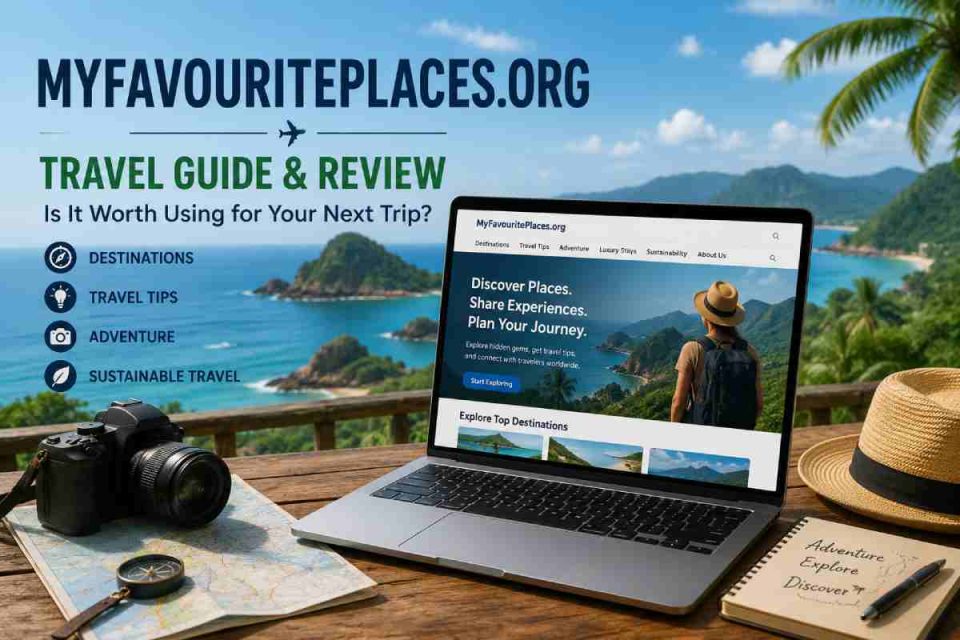
That is the space // @myfavouriteplaces.org appears to target. The website presents itself as a travel-focused resource covering destinations, travel tips, adventure experiences, luxury resorts, and sustainability. Its own About page describes the platform as a place for travel tips, packing advice, money-saving strategies, adventure ideas, and destination inspiration.
People no longer rely only on guidebooks or large booking websites to decide where to go. Personal recommendations, travel communities, destination stories, and niche travel blogs now play a major role in trip planning.
That said, there’s a big discrepancy between what the website states and what you’ll be able to fact-check in the wild: Some pages make very generic statements about its community options, subscriptions, interactivity with maps and user-driven material, just like the present site has content such as travel essays with some weird writer patterns (or subject matters). Therefore, a closer inspection than simply seeing this Webpage as another travel guide.
Table of Contents
What Is // @MyFavouritePlaces.org?
// @MyFavouritePlaces.org presents itself as an online travel destination for people looking for inspiration, travel advice, adventure ideas, and luxury accommodation content. Its About page specifically highlights travel tips, packing advice, money-saving strategies, off-the-beaten-path destinations, hiking, diving, and other activities.
Content also comprises luxury resort articles, flight information, travel gear, and information about traveling to various locales, sustainability, travel, and sustainability, and planning a getaway. The site’s currently featured areas are Luxury & Resorts, Travel & Sustainability, and Travel Tips & Hacks.
In other words, // @MyFavouritePlaces.org is a potentially inspirational source for novice travelers, but should not be considered a substitute for official travel authorities, transport providers, hotels, and specialist travel advisors.
// @MyFavouritePlaces.org Overview
| Factor | What the available evidence shows |
|---|---|
| Main niche | Travel and destination content |
| Primary audience | Travelers seeking ideas, tips, and inspiration |
| Content areas | Destinations, adventures, luxury travel, sustainability, travel tips |
| Community positioning | The site describes itself as community-oriented |
| User-generated content | Claimed across several pages, but individual verification varies |
| Pricing | Some pages describe free and premium options, but clear current pricing is not readily established |
| Best use | Travel inspiration and preliminary research |
| Important caution | Verify important travel information independently |
How the Platform Positions Itself
The strongest positioning theme is discovery rather than booking. The website talks about finding hidden destinations, discovering travel experiences, learning from other travelers, and exploring practical travel information. One dedicated article describes the platform as community-driven and says users can share personal experiences, photos, testimonials, destination recommendations, and travel stories.
Another page claims that travelers can browse destinations, use search and filtering tools, save favorite places, and collaborate on itineraries. It also describes free and premium access.
Those claims sound useful in theory, but travelers should distinguish between described functionality and functionality they can currently verify on the live website.
That distinction matters because travel decisions can involve significant spending. A platform can be useful for discovering an idea while still requiring independent verification before someone books flights, accommodation, tours, or activities.
What Kind of Content Can You Find?
The current website covers a surprisingly broad range of subjects.
Rather than focusing exclusively on destination guides, its homepage includes luxury resorts, airfare advice, artificial intelligence in travel, neighborhood guides, adventure activities, and sustainability-related topics. This creates both an advantage and a weakness.
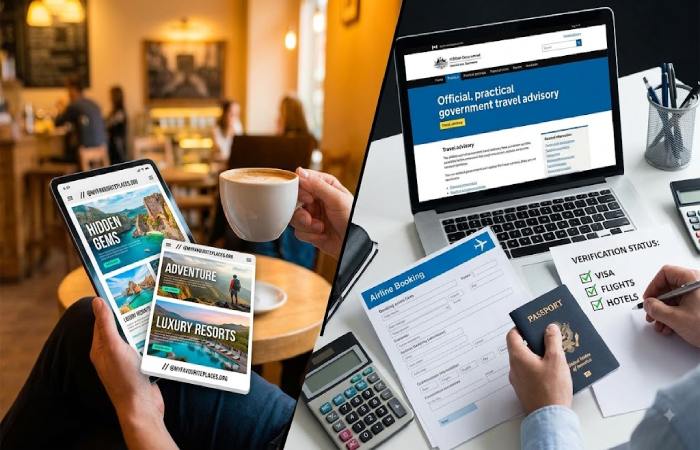
The advantage is variety. A reader researching a destination may encounter accommodation ideas, travel technology, transportation advice, and general planning information in the same environment.
The weakness is topical consistency. A highly focused destination website usually makes it easier to determine whether an article comes from a specialist with direct experience in that destination. A broad publishing model requires readers to evaluate individual articles more carefully.
Main Content Categories
| Category | Potential value to readers | What to check |
|---|---|---|
| Destination guides | Ideas for places to visit | Date, author experience, local accuracy |
| Travel tips | Practical planning suggestions | Whether advice is current |
| Adventure travel | Activity inspiration | Safety and operator information |
| Luxury travel | Resort and experience ideas | Current rates and availability |
| Sustainability | Responsible travel ideas | Evidence behind environmental claims |
| Travel technology | Tools and planning trends | Whether products/features still exist |
| Hidden gems | Less conventional ideas | Opening hours and accessibility |
Is the Information Reliable?
This is where readers should take a more evidence-based approach. A travel website does not need to be perfect to be useful. But the reliability of travel information depends heavily on the type of claim being made.
For example, an article describing a destination’s atmosphere is subjective. A claim about a visa requirement, hotel price, attraction opening time, airline policy, or trail condition is much more time-sensitive.
The website itself says its content includes practical travel information and community experiences. But readers should still verify consequential information with primary sources.
For example:
- Check immigration requirements with the relevant government authority.
- Confirm flight schedules with the airline.
- Check hotel prices directly before budgeting.
- Verify attraction opening hours with the attraction.
- Check weather and safety conditions shortly before outdoor activities.
- Confirm health or vaccination requirements through authoritative sources.
This is not a criticism unique to this website. It is simply good travel research practice.
The Biggest Strength: Travel Inspiration
The strongest practical use of // @myfavouriteplaces.org is likely inspiration.
Travelers often know that they want to take a trip but do not know exactly where to go. In that situation, articles about hidden destinations, unusual experiences, luxury resorts, adventure activities, or local neighborhoods can help generate ideas.
The website’s own editorial positioning repeatedly emphasizes hidden gems and authentic experiences.
For beginners, this can be especially useful. Instead of starting with a blank itinerary, a traveler can first identify several destinations or experiences that fit their interests.
A sensible workflow is:
Discover → Shortlist → Verify → Compare → Book
The discovery stage is where a broad travel platform can provide the most value.
What About User-Generated Content?
Several pages describe the platform as community-driven. The site’s articles claim that travelers can share experiences, photos, recommendations, and stories. One page describes user-generated content as central to the platform.
Community content can be extremely valuable because travelers often provide details that conventional tourism pages overlook.
For example, someone might explain:
- Which neighborhood feels easiest to explore on foot.
- What time a popular attraction becomes crowded.
- Which viewpoint is better at sunset.
- Whether public transport is convenient.
- What they wish they had packed.
- Which tourist experience did not justify its price.
But user-generated information also has limitations. Personal experience is not automatically universal truth. A restaurant recommendation from one traveler may not suit another person’s budget or dietary needs. A hiking experience from one season may also differ dramatically in another. The best approach is to use community content as firsthand perspective, not unquestionable authority.
How Beginners Should Use the Website
First-time travelers should avoid building an entire trip from one website.
Instead, use the platform during the research phase.
Start by identifying a destination or type of experience. Then read several relevant articles rather than relying on a single recommendation. Note recurring suggestions, potential costs, transportation options, and activities.
After that, verify the practical details elsewhere.
A Simple Research Method
| Step | Action | Purpose |
|---|---|---|
| 1 | Browse destination content | Generate ideas |
| 2 | Save interesting locations | Build a shortlist |
| 3 | Compare several recommendations | Identify recurring themes |
| 4 | Verify practical details | Avoid outdated information |
| 5 | Check official sources | Confirm rules and availability |
| 6 | Compare costs | Build a realistic budget |
| 7 | Create the itinerary | Turn research into a trip |
This approach prevents one of the most common travel-planning mistakes: confusing inspiration with confirmation.
What Are the Concerns to Keep in Mind?
There are several reasons to approach the website carefully.
First, the site’s content is broad. Articles cover many unrelated areas, so author expertise may vary between topics.
Second, some pages make extensive claims about platform functionality. For example, one article describes interactive maps, advanced filters, saved favorites, itinerary collaboration, and premium subscription options. Readers should verify which of these features are actually available before relying on them.
Third, the website’s contact page currently lists an unusual-looking address, “6543 Vexarian Circle, Nytherion, FL 73829,” alongside its email contact. That address should not automatically be interpreted as evidence of a physical business location, particularly because “Nytherion” and the ZIP combination deserve independent verification.
There is also third-party automated domain information. Scam Detector currently reports a medium-risk score of 66.7 and lists a 2021 registration date, while noting that domain ownership information is privacy-protected. Automated trust scores are not proof that a website is fraudulent, but they are another reason to perform due diligence before providing payment or sensitive personal information.
Is It a Booking Website?
Based on the available material, it is better to think of the platform primarily as a travel content and discovery resource, rather than assuming it is a full-service booking provider.
Its published material focuses heavily on destinations, stories, tips, recommendations, and travel inspiration.
If an article recommends a hotel, flight, activity, or travel service, readers should check the actual provider before making a purchase.
This also protects travelers from an increasingly common problem online: old travel articles can continue ranking in search results even after prices, policies, businesses, or attractions have changed.
MyFavouritePlaces.org vs. Traditional Travel Research
The best travel research rarely comes from one source. A community-oriented travel site and an official tourism website serve different purposes. The former may offer personal experiences and inspiration, while the latter may provide official information about regulations, attractions, transportation, or local requirements.
| Research Need | Better Source Type |
|---|---|
| Destination inspiration | Travel communities and blogs |
| Personal experiences | Traveler reviews and firsthand accounts |
| Visa rules | Government/official immigration sources |
| Flight schedule | Airline |
| Hotel availability | Hotel or reputable booking platform |
| Attraction hours | Official attraction website |
| Local safety information | Government travel advisories |
| Weather | Established weather service |
| Local transportation | Official transport provider |
This multi-source approach is especially important for international travel.
Who May Find It Useful?
The platform is most useful for readers who are still exploring possibilities.
Beginners can use it to understand different travel styles and discover destinations they had not considered.
Intermediate travelers may benefit more from niche ideas, adventure destinations, luxury travel concepts, and unusual experiences.
Professional travel researchers and content creators can use travel articles as starting points for identifying themes and questions worth investigating, but should rely on primary sources when accuracy is critical.
In other words, its value depends on where you place it in your research process.
Final Verdict
// @myfavouriteplaces.org is best approached as a travel inspiration and content resource rather than an unquestioned authority on every travel decision.
Its published material covers destinations, travel tips, adventure experiences, luxury resorts, sustainability, and travel technology. The website also presents itself as community-oriented, with claims around traveler contributions and shared experiences.
Its biggest potential strength is discovery. It can help travelers move from “I want to travel somewhere” to a shortlist of destinations and experiences.